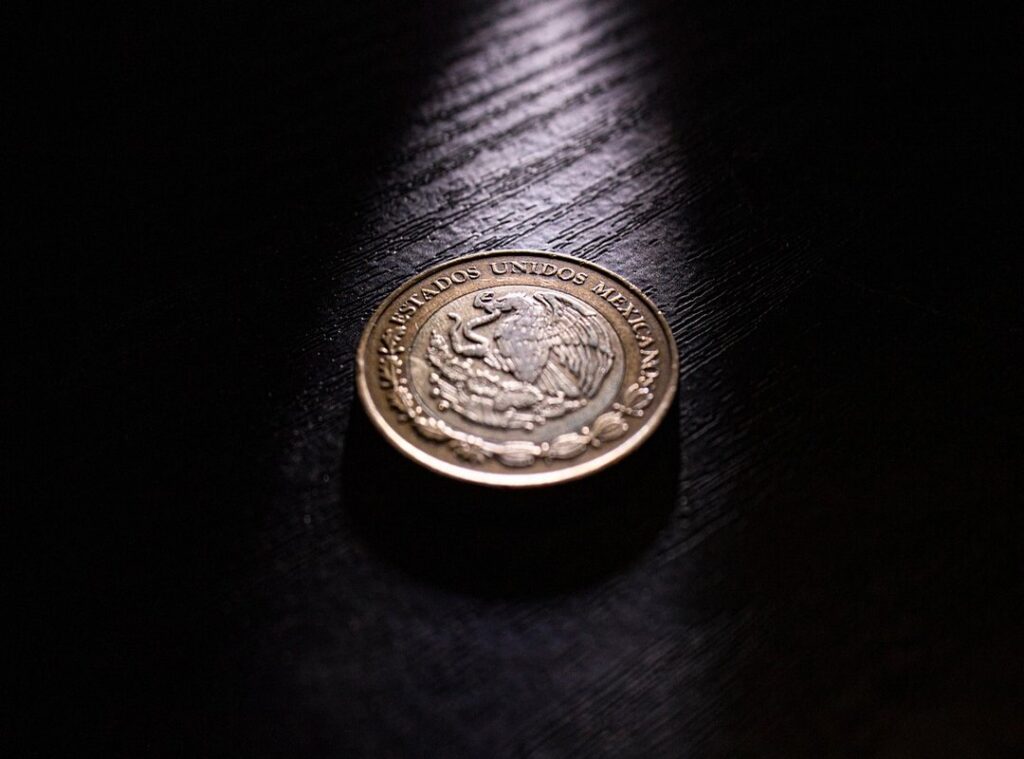
If you’re looking to convert 7500 pesos mexicanos a pesos chilenos, the current mid-market rate is around 380,000 CLP. That’s the number, but there’s more to it.
I want to go beyond just giving you a number. Let’s talk about what this exchange rate means. Why does it matter?
And how can you get the best deal?
The rate you see on Google or other platforms is the mid-market rate. But here’s the thing: when you actually go to exchange your money, you won’t get that exact amount. Fees and spreads come into play, and they can make a big difference.
By the end of this guide, you’ll understand not just the ‘what’ but the ‘why’ and ‘how’ of converting Mexican Pesos to Chilean Pesos. Trust me, it’s worth knowing.
Understanding the Current MXN to CLP Exchange Rate
I was in a small café in Santiago, Chile, last month, trying to figure out if I could afford a cup of coffee with my leftover Mexican Pesos. That’s when I realized how important it is to understand the MXN/CLP currency pair.
The exchange rate number tells you how many Chilean Pesos (CLP) one Mexican Peso (MXN) can buy. It’s like a direct conversion rate between the two currencies.
To convert 7,500 MXN to CLP, you just multiply by the current rate. For example:
- 7,500 MXN * [current CLP per MXN] = Total CLP
It’s a simple calculation, but it can make a big difference in your budget.
| Date | High (CLP) | Low (CLP) | Average (CLP) |
|---|---|---|---|
| Last 30 Days | 12.50 | 11.80 | 12.15 |
This table shows the high, low, and average rates over the last 30 days. You can see how much the rate can fluctuate.
There’s also something called the mid-market rate. This is the actual exchange rate between two currencies without any extra fees. Financial institutions, on the other hand, offer a buy/sell rate.
They add a margin to the mid-market rate, which is why there’s always a difference. It’s their way of making a profit.
Checking a live currency converter is crucial before making any transaction. Rates can change daily, and you don’t want to be caught off guard.
Last week, I was planning to send some money to a friend in Chile. I checked the rate in the morning, but by the time I got around to it in the afternoon, it had already changed. That’s why I always double-check the 7500 pesos mexicanos a pesos chilenos rate right before I do anything.
What Makes the Mexican to Chilean Peso Rate Change?
Understanding the 7500 pesos mexicanos a pesos chilenos rate can feel like trying to solve a Rubik’s cube blindfolded. But don’t worry, I’m here to break it down for you.
First up, let’s talk about the central banks. Banco de México and Banco Central de Chile are like the puppet masters. When they change interest rates, it affects how much people want to invest in their respective countries.
Higher interest rates usually mean more investors, which can make the currency stronger.
Inflation and GDP growth are like the health check-ups for an economy. If Mexico is doing well and inflation is under control, the peso might get stronger. The same goes for Chile.
It’s like a game of “who’s got the better stats.”
Trade between the two nations is another big factor. Chile is known for its copper, and Mexico for its manufactured goods. If one country is exporting more than the other, it can tip the scales.
Imagine if you had a lemonade stand, and your neighbor had a cookie stand. Whoever sells more gets more cash, right?
Now, let’s not forget about the global market. Both the Mexican and Chilean pesos are considered emerging market currencies. This means they’re a bit more sensitive to what’s happening with the US Dollar.
If the dollar strengthens, it can make these currencies look less attractive.
Think of it like this: if everyone suddenly wants to buy lemons, the price of lemons goes up. Similarly, if more people want to buy pesos (either Mexican or Chilean), the value of that currency goes up. It’s all about supply and demand.
So, next time you see the 7500 pesos mexicanos a pesos chilenos rate, you’ll know it’s a mix of central bank policies, economic health, trade, and global market sentiment. And hey, maybe you’ll even impress your friends with your newfound knowledge.
3 Smartest Ways to Exchange Your Currency

Method 1: Online Money Transfer Services (e.g., Wise, Remitly)
These services offer better exchange rates and lower fees. They’re super convenient too. But you need to set up an account, and the transfer time can vary. 7500 pesos mexicanos
Method 2: Traditional Banks
Exchanging currency at a major bank is straightforward. You get security and can walk out with physical cash. However, banks typically have worse rates and higher hidden fees.
It’s a trade-off.
Method 3: Airport Currency Exchange Kiosks & Local ‘Casas de Cambio’
This should be your last resort. The rates are terrible, and the fees are high. Sure, it’s convenient, but you’ll end up losing a lot of money.
Avoid it if you can.
Pro Tip: Always compare rates and fees before making a decision.
Let’s look at a real example. Say you want to convert 7,500 MXN to CLP.
- Online Money Transfer Services: You might get around 45,000 CLP.
- Traditional Banks: You’d likely get about 42,000 CLP.
- Airport Kiosks & Local ‘Casas de Cambio’: You’d only get around 38,000 CLP.
See the difference? Using online services, you get more bang for your buck. Traditional banks are okay in a pinch, but airport kiosks and local exchanges?
Not worth it.
So, next time you need to convert 7,500 pesos mexicanos a pesos chilenos, think twice before heading to the airport.
Common Questions About Exchanging Mexican and Chilean Pesos
Is it better to exchange money before I travel to Chile or once I arrive? I’ve tried both, and here’s what I learned. Exchanging money before you travel can give you peace of mind.
You know exactly how much you have in local currency, and you avoid the hassle of finding a reliable place to exchange once you’re there.
But, if you wait until you get to Chile, you might find better rates. Banks and ATMs in Chile often offer competitive rates. Just be sure to check with your bank about any fees.
What are the typical fees I should expect when converting currency? This is where things can get tricky. Banks and exchange offices usually charge a percentage as a conversion fee.
Sometimes, they also add a flat fee on top. It’s not uncommon to see fees ranging from 1% to 5%.
I once got hit with a 3% fee plus a $5 flat fee, which really added up. Always ask about all the fees upfront. It’s a lesson I learned the hard way.
Can I use my Mexican credit or debit card in Chile, and is it a good idea? Yes, you can use your Mexican cards in Chile. Most places accept major credit cards like Visa and Mastercard.
It’s a good idea for convenience and security.
However, make sure to let your bank know you’ll be traveling. I once had my card blocked because I didn’t inform them, and it was a real pain to sort out.
How much cash should I carry versus relying on cards when visiting Chile? I recommend a mix of both. Carry some cash for small purchases and emergencies, but rely on your cards for larger transactions.
In my experience, having about 7500 pesos mexicanos a pesos chilenos in cash is a good start. It covers small expenses and gives you a buffer if you can’t use your card.
Just remember, always keep your cash in a safe place. I once lost a bunch of cash in a crowded market, and it was a tough lesson in being more careful.
Getting the Best Value for Your 7,500 Pesos
The exact value of 7500 pesos mexicanos a pesos chilenos is not fixed and depends heavily on the exchange method you choose. While bank rates are safe, online transfer services almost always offer a better financial outcome for the user.
Always compare the total amount you will receive after all fees, not just the advertised exchange rate. A few minutes of research before exchanging money can save a significant amount. This ensures you make a smart financial decision.
 Garfield Martelesters is the kind of writer who genuinely cannot publish something without checking it twice. Maybe three times. They came to expert insights through years of hands-on work rather than theory, which means the things they writes about — Expert Insights, Effective Branding Strategies, Content Creation Tips, among other areas — are things they has actually tested, questioned, and revised opinions on more than once.
That shows in the work. Garfield's pieces tend to go a level deeper than most. Not in a way that becomes unreadable, but in a way that makes you realize you'd been missing something important. They has a habit of finding the detail that everybody else glosses over and making it the center of the story — which sounds simple, but takes a rare combination of curiosity and patience to pull off consistently. The writing never feels rushed. It feels like someone who sat with the subject long enough to actually understand it.
Outside of specific topics, what Garfield cares about most is whether the reader walks away with something useful. Not impressed. Not entertained. Useful. That's a harder bar to clear than it sounds, and they clears it more often than not — which is why readers tend to remember Garfield's articles long after they've forgotten the headline.
Garfield Martelesters is the kind of writer who genuinely cannot publish something without checking it twice. Maybe three times. They came to expert insights through years of hands-on work rather than theory, which means the things they writes about — Expert Insights, Effective Branding Strategies, Content Creation Tips, among other areas — are things they has actually tested, questioned, and revised opinions on more than once.
That shows in the work. Garfield's pieces tend to go a level deeper than most. Not in a way that becomes unreadable, but in a way that makes you realize you'd been missing something important. They has a habit of finding the detail that everybody else glosses over and making it the center of the story — which sounds simple, but takes a rare combination of curiosity and patience to pull off consistently. The writing never feels rushed. It feels like someone who sat with the subject long enough to actually understand it.
Outside of specific topics, what Garfield cares about most is whether the reader walks away with something useful. Not impressed. Not entertained. Useful. That's a harder bar to clear than it sounds, and they clears it more often than not — which is why readers tend to remember Garfield's articles long after they've forgotten the headline.