

You found that old album in the attic.
Dust on the spine. Yellowed pages. Stamps you’ve never seen before.
And now you’re wondering: Is this worth anything? Or is it just nostalgia wrapped in paper?
I’ve seen this exact moment a hundred times.
People holding something real (something) tactile. And feeling totally lost about what it means.
Stamp Library Flpstampive isn’t a brand. It’s not a product. It’s how collectors actually talk when they’re serious.
Not about price tags, but about context, condition, and quiet intention.
I’ve sat in auction rooms since 2003. Watched collections sell for $200 and $200,000. Talked to retirees, teens, librarians, historians.
All building different kinds of meaning, one stamp at a time.
The problem? Nobody agrees on what “valuable” even means here.
Some chase rarity. Others care only about postmarks. A few just want stories.
This article cuts through the noise.
No jargon. No fluff. Just clear language, real examples, and steps you can use today to build a collection that feels right.
Not one that just looks good on a shelf.
You’ll know what to keep. What to pass on. And why.
Flpstampive Isn’t a Typo. It’s a Mindset
I typed “Flpstampive” wrong three times before I realized it wasn’t a mistake.
It’s a portmanteau. Floral. Philatelic.
Stampive. (Yes, “stampive” is a word now. Deal with it.)
This isn’t about collecting stamps because they’re rare or expensive. It’s about collecting because they feel right.
Flpstampive is the name for that quiet shift. From checking boxes to following intuition.
Traditional topical collecting says: birds, space, trains. Fine. But boring if you don’t care about birds.
Flpstampive asks: What color makes your chest hum? Which decade feels like home? Whose story do you want to hold in your hands?
I built a collection around golden-hour light. Not sunsets (light.) Stamps from Jamaica, Japan, Finland. All sharing that same warm, low-angle glow.
No shared country. No shared year. Just mood.
Another friend collected floral stamps across 80 years and 12 countries. Same motif. Different hands.
Different wars. Different paper.
A third mapped her family’s migration (stamps) mailed from Cuba, then Miami, then Chicago (each) with a postmark and a date she’d never seen before.
Scarcity doesn’t spark joy. Intention does.
That’s why “Stamp Library Flpstampive” matters. It’s not a database. It’s a compass.
You already know what draws you in. Stop apologizing for it.
How to Build a Stamp Collection Flpstampive. Step by Step
I started my Flpstampive collection after staring at a 1967 Canadian Wildflowers stamp for ten minutes. It wasn’t about the face value. It was about the botanical precision (the) way the trillium’s veins echoed my own nervous system.
First: name your trigger. Is it light? Memory?
A specific color temperature? (Mine was quietness. Not silence (quietness.))
Second: research like a curator, not a scavenger. Look up designers (not) just countries or years. Who drew that Bhutan butterfly?
Why did Japan choose that cherry branch angle in 2004?
Third: set hard rules. “Only stamps with visible botanical illustration” is better than “mostly flowers.” Vagueness kills cohesion.
Fourth: skip eBay first. Go to national postal archives. Hit thematic auctions.
Talk to dealers who remember what their grandfather sold in ’83.
Fifth: document why, not just when. Did this Finland Midnight Sun stamp make you pause because of the tilt of the horizon? Write that down.
Before adding any stamp, ask:
Does it deepen the theme? Does it surprise or connect? Does it connect to at least one other piece?
I covered this topic over in Stamps Flpstampive.
Drifting into generic accumulation is the fastest way to kill momentum. So is ignoring condition. A torn corner breaks the spell.
Rarity means nothing if it doesn’t belong.
That’s why the Stamp Library Flpstampive isn’t about size. It’s about resonance density.
Starter kit? Try these five:
1967 Canadian Wildflowers
1982 Bhutan Butterflies
2004 Japan Cherry Blossom
1999 Finland Midnight Sun
2011 UK Garden Birds
They’re affordable. They’re intentional. They talk to each other.
Valuing a Stamp Collection Flpstampive (Beyond) Scott Numbers
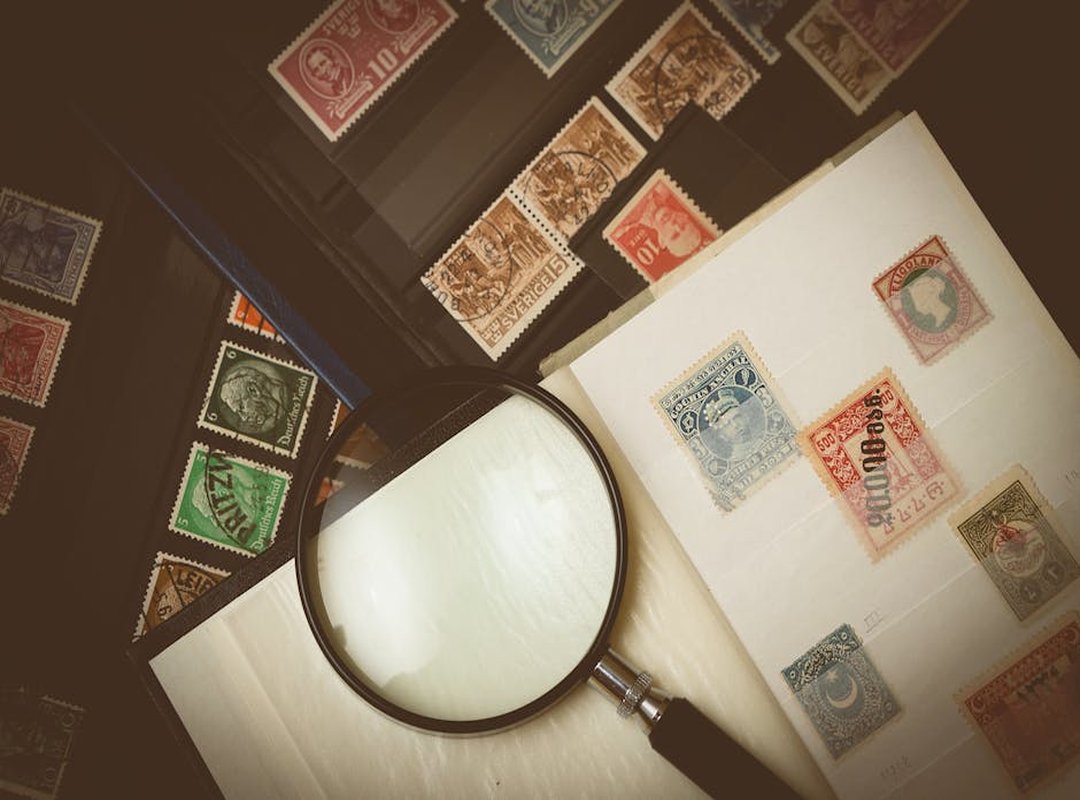
Scott numbers lie. Not on purpose. But they ignore everything that makes a collection yours.
Condition matters. Provenance matters. Thematic density matters.
Visual flow matters. Face value? Volume?
Barely registers.
I’ve seen a 1950s airmail set priced at $200 in the catalog sell for $1,800 because the owner grouped stamps by flight route (and) included original baggage tags.
That’s not fluke. That’s Cohesion Index.
It’s a 1 (5) scale. Five means the stamp is an irreplaceable narrative anchor. Two means it’s a tolerable outlier.
One? It breaks the theme entirely.
Most appraisers don’t score this. They grade paper and gum. Not storytelling.
So when do you seek appraisal? When you’re preparing to sell, donate, or insure. But only with specialists who ask why you grouped those three 1972 botanical issues together.
Three red flags:
- They mention only centering and hinge marks
- They skip your handwritten notes
A real example: a modest 1970s floral collection. Catalog value? $450. Sold for $1,350.
Why? Curated presentation. Handwritten curator notes.
Exhibition history at two regional shows.
You can see how that logic extends across formats on the Stamps flpstampive page.
The Stamp Library Flpstampive isn’t about storage. It’s about continuity.
Don’t just count stamps. Trace the thread.
Where to Find, Share, and Grow Your Stamp Collection Flpstampive
I started with a $3 box of used definitives from a flea market. No fancy gear. No budget.
Just curiosity.
The Stamp Library Flpstampive isn’t locked behind paywalls or auction houses. It’s in places most people scroll past.
Try the Philatelic Thematic Association’s forums. They’re quiet. No algorithms.
Just collectors posting scans and asking real questions. (Yes, they still exist.)
Instagram hashtags like #FloralStamps or #NarrativePhilately? Skip the influencers. Look for accounts with 200 followers and handwritten captions.
That’s where the good stuff hides.
Small-run zines by collector-artists often include hand-stamped covers and rejected proofs. One came with a note: “This design got cut. But it’s still real.”
Local museums run outreach programs. They’ll take your thematic set on loan. No insurance required (if) you help write the wall text.
Ethical sharing means telling the story, not inflating value. Credit the designer. Name the issuing authority.
And never say “rare” unless you’ve checked the Scott Catalogue and talked to someone who’s handled the plate block.
Host a ‘Theme Swap’. Send one stamp (say,) a 1972 Finnish bee issue (to) three people. Get back three stamps you’ve never seen.
Done.
It works. I ran one last spring. Got a Peruvian orchid stamp, a Polish folk-tale postmark, and a North Korean textile series.
All under $2 each.
Accessibility isn’t a buzzword here. It’s fact.
Logo Directory Flpstampive helps you ID obscure issuers fast (no) guesswork.
Start Curating With Purpose Today
You feel it. That quiet disconnect when you open your stamp box and see objects (not) meaning.
Stamp Library Flpstampive fixes that. Not by chasing rarity or price tags. But by anchoring each stamp to you.
Your memory. Your curiosity. Your gut reaction.
Perfection is a trap. Alignment isn’t.
So pick one theme you actually care about. Not what’s valuable. Not what’s “supposed” to matter.
Just one thing that pulls at you.
Find three stamps (even) old ones, even cheap ones (and) lay them out in order of how they hit you. Not chronologically. Not by country.
By feeling.
That’s where your collection stops waiting for validation.
It’s already speaking.
You just haven’t leaned in yet.
Exploring new design resources can elevate your projects, so don’t forget to check out the Logo Directory Flpstampive for inspiration.
Do it now. Before you close this tab.
 Angelo Reynoldsick has opinions about expert insights. Informed ones, backed by real experience — but opinions nonetheless, and they doesn't try to disguise them as neutral observation. They thinks a lot of what gets written about Expert Insights, Effective Branding Strategies, Customer Engagement Techniques is either too cautious to be useful or too confident to be credible, and they's work tends to sit deliberately in the space between those two failure modes.
Reading Angelo's pieces, you get the sense of someone who has thought about this stuff seriously and arrived at actual conclusions — not just collected a range of perspectives and declined to pick one. That can be uncomfortable when they lands on something you disagree with. It's also why the writing is worth engaging with. Angelo isn't interested in telling people what they want to hear. They is interested in telling them what they actually thinks, with enough reasoning behind it that you can push back if you want to. That kind of intellectual honesty is rarer than it should be.
What Angelo is best at is the moment when a familiar topic reveals something unexpected — when the conventional wisdom turns out to be slightly off, or when a small shift in framing changes everything. They finds those moments consistently, which is why they's work tends to generate real discussion rather than just passive agreement.
Angelo Reynoldsick has opinions about expert insights. Informed ones, backed by real experience — but opinions nonetheless, and they doesn't try to disguise them as neutral observation. They thinks a lot of what gets written about Expert Insights, Effective Branding Strategies, Customer Engagement Techniques is either too cautious to be useful or too confident to be credible, and they's work tends to sit deliberately in the space between those two failure modes.
Reading Angelo's pieces, you get the sense of someone who has thought about this stuff seriously and arrived at actual conclusions — not just collected a range of perspectives and declined to pick one. That can be uncomfortable when they lands on something you disagree with. It's also why the writing is worth engaging with. Angelo isn't interested in telling people what they want to hear. They is interested in telling them what they actually thinks, with enough reasoning behind it that you can push back if you want to. That kind of intellectual honesty is rarer than it should be.
What Angelo is best at is the moment when a familiar topic reveals something unexpected — when the conventional wisdom turns out to be slightly off, or when a small shift in framing changes everything. They finds those moments consistently, which is why they's work tends to generate real discussion rather than just passive agreement.